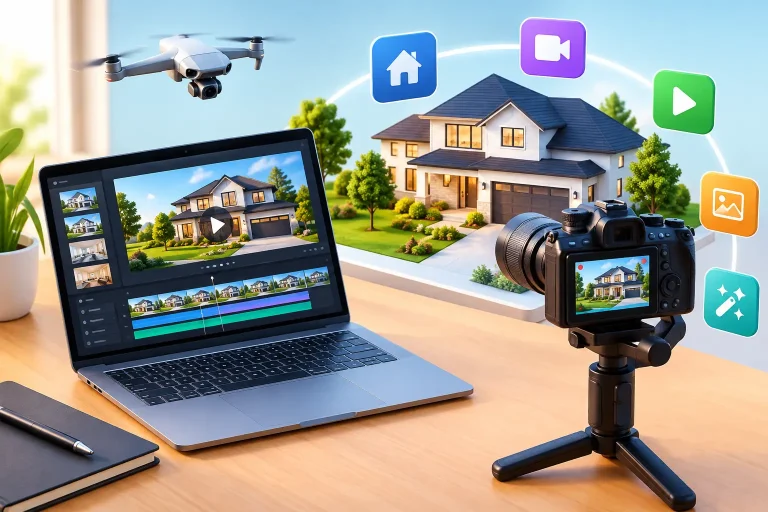
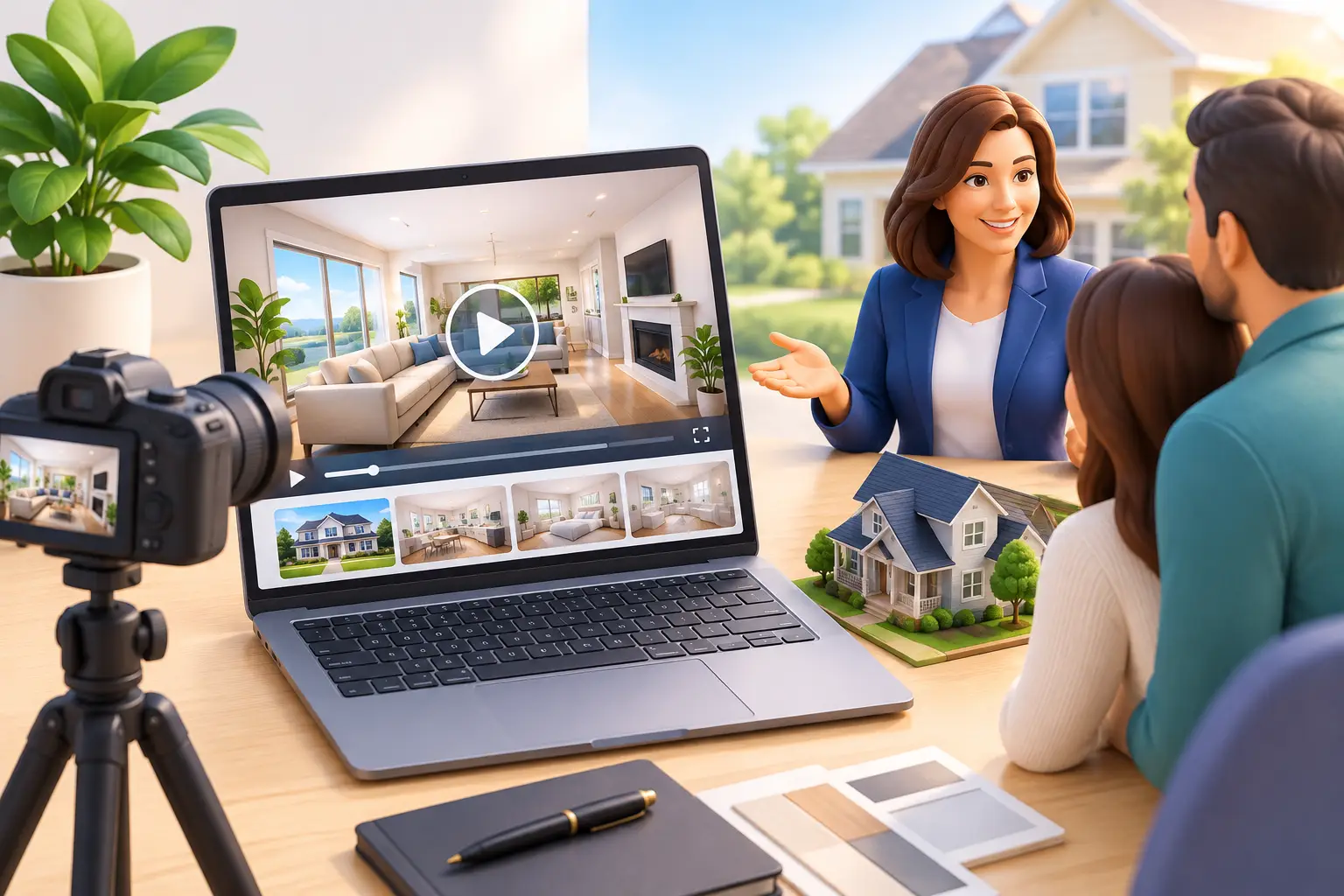
Listing Videos That Help Win More Sellers
A seller does not compare your marketing plan to a blank page. They compare it to the agent who promises professional photography, video, social posts, and a launch that looks organized from day one. Listing videos give you a clear way to show that every property will receive more than a photo carousel, even when the listing budget and timeline are tight.
For many agents, the problem is not whether video works. It is the work required to produce it. A traditional video shoot can mean booking a videographer, coordinating property access, hoping the home is ready, reviewing an edit, and waiting days to post. That process may make sense for a luxury listing with a large marketing budget. It does not make sense as the baseline for every home you represent.
The smarter standard is simple: use the listing photos you already have to create a polished video asset for every listing, then publish the right version in the right place.
Why listing videos have become a seller expectation
A listing video gives a property motion, pacing, narration, and a story. Photos still do the essential work of documenting rooms, finishes, and condition. Video turns those individual images into a guided viewing experience that helps buyers understand the home before they schedule a showing.
That matters on social platforms, where static posts compete with an endless feed of short-form video. It also matters in a listing presentation. When you can show sellers examples of recent properties with consistent, branded marketing, you are not asking them to imagine what you will do. You are showing them.
The value is not limited to views. A well-made video supports several parts of an agent’s job at once: attracting attention, explaining key features, giving sellers something easy to share, and keeping your social channels active between open houses and new listings. One set of listing photos can become an MLS-safe property video, a vertical reel, a YouTube upload, an email asset, and a post for your website.
That is a much better return on photography you have already paid for.
The real trade-off: filmed video versus photo-based video
Filmed property tours have a place. When a home has exceptional architecture, dramatic outdoor space, a waterfront setting, or a high-end price point, original cinematic footage can add real value. A skilled videographer can capture movement through a space, natural light, neighborhood context, and details that still photography cannot.
But there is a trade-off. Film production requires scheduling, access, weather cooperation, a prepared property, and a budget that can range from a few hundred dollars to much more. It also creates a dependency: if the shoot is delayed, your launch may be delayed.
Photo-based listing videos solve a different problem. They provide a reliable, repeatable marketing asset without requiring another appointment at the property. The best treatments preserve the actual listing photos while adding subtle camera motion, captions, music, a voiceover, title cards, and a clear property flow.
The goal is not to pretend still photos are footage. The goal is to make excellent use of the visual materials already in your workflow. For the majority of everyday residential listings, that distinction can lower costs and shorten turnaround without making your marketing look like an afterthought.
What an effective listing video needs
A video does not need flashy transitions or a generic sales script to hold attention. It needs to make the home easy to understand quickly. Start with a clean opening that identifies the property, then move through the strongest visual sequence: curb appeal, main living areas, kitchen, primary suite, secondary spaces, outdoor features, and a direct next step.
The narration should add context that photos cannot always provide. It can call out an updated kitchen, flexible bonus room, oversized lot, walkable location, or recent improvements. It should not make claims that are unsupported by the listing details. Fair housing compliance and accuracy still apply when a property is described in video.
Captions are equally useful. Many people scroll with sound off, especially on Instagram Reels, TikTok, and Facebook. Captions help the video communicate in silent autoplay and make key details easier to absorb. They also give sellers a more accessible asset to share with their own network.
Branding needs judgment. Your name, logo, headshot, and contact details belong on social versions, email versions, and your website. MLS rules may require an unbranded version. That is why it is practical to create both from the same source materials rather than rebuilding a video for each channel.
Build once, publish in the format each channel needs
A landscape 16:9 video works well for MLS, YouTube, websites, presentations, and many email placements. A vertical 9:16 version is built for the screen people hold in their hand. Reels, TikTok, YouTube Shorts, and Stories reward vertical framing because it fills more of the phone display.
Trying to force one format everywhere usually creates a compromised result. A horizontal property video posted vertically may leave large empty areas on screen or crop important details. A vertical reel embedded on a website can feel awkward. Both versions should be part of the plan from the start.
This is where a repeatable production process saves time. Visual Property Agent turns a listing link or uploaded listing photos into narrated 1080p property videos in both landscape and vertical formats. You can review and edit every spoken line before rendering, then use branded versions for marketing and unbranded versions where MLS requirements call for them.
The practical advantage is not just speed. It is consistency. Your next listing does not have to wait for a free afternoon, editing software, or a contractor’s production queue. The process can stay the same whether you represent three properties a year or thirty.
A simple workflow for every new listing
The strongest video strategy is one you can repeat under deadline. Once photography is complete and the listing details are confirmed, create the video while you are preparing the rest of the launch materials. Do not treat it as an optional social post to get around to later.
First, review the photos as a sequence. Lead with the image that earns attention, not necessarily the first exterior shot in the folder. A striking kitchen, bright living room, or distinctive exterior can be the better opener. Keep the order logical enough that a buyer can mentally walk through the home.
Next, review the script carefully. Automated copy can save time, but you are still responsible for what goes out under your name. Remove vague phrases, verify room counts and features, and add the details that make the property specific. A concise script is usually stronger than a long list of adjectives.
Then, prepare distribution around the finished asset. Use the landscape version in channels where buyers expect a fuller property presentation. Use the vertical version as the short-form attention driver. The caption or post text can invite viewers to request details, book a showing, or visit the listing page.
Finally, send the video to the seller. This is a small step with outsized value. Sellers see the quality of your launch, have something polished to share, and are more likely to understand the marketing work happening beyond the yard sign and MLS entry.
Common mistakes that make property video less useful
The first mistake is waiting for perfect conditions. If video only happens when a listing has an exceptional budget, the majority of your sellers will never see it. A consistent photo-based process creates a higher baseline for your whole business.
The second is overloading the video with information. Buyers do not need every line from the property description spoken aloud. Focus on the features that shape the buying decision. Let the photos do their job.
The third is treating social video as a complete replacement for listing data. A reel can create interest, but it should direct that interest toward accurate details, showings, and the full property presentation. Keep the message clear and the compliance requirements intact.
The fourth is using branding where it does not belong. An agent-branded reel is useful for prospecting and seller visibility. An MLS-safe asset may need no agent name, logo, phone number, or promotional language. Build for both uses instead of risking a last-minute compliance problem.
Make video part of the promise, not an exception
When you tell a prospective seller that every listing receives a video, you are making a promise that is easy to understand. It is more concrete than saying you will provide “maximum exposure,” and it gives your marketing plan a visible difference.
The key is making that promise economically sustainable. If each video requires another shoot, another invoice, and another week of coordination, it will be difficult to deliver consistently. If it starts with the listing photos already being produced, it can become a standard part of every launch.
Your next listing does not need a complicated production plan. Start with the property photos, tell the home’s story accurately, create versions for the channels you use, and give the seller something worth sharing before the first weekend of showings.