Listing Video Software Versus Videographers
A listing goes live on Thursday. The photographer has already delivered the photos, the seller expects marketing to start immediately, and you need a video for social by the weekend. That is where listing video software versus videographers becomes a business decision, not a creative debate.
Both can produce useful marketing. The better choice depends on the property, your deadline, your budget, and how often you need video. For most agents, the real question is not, “Which one is better?” It is, “Which one lets every listing show up professionally without slowing down the rest of my business?”
Listing Video Software Versus Videographers: The Real Difference
A videographer creates footage at the property. That can include stabilized walkthroughs, exterior movement, detailed lifestyle shots, drone footage, and a custom edit. It is a hands-on production service. For the right home, it can be worth it.
Listing video software starts with assets you already have: listing photos, property facts, agent branding, and contact information. The platform turns those materials into a narrated video with motion, music, captions, title cards, and a formatted closing screen. There is no shoot date to coordinate, no property access to arrange, and no editing timeline to wait through.
That difference changes the workflow. With a videographer, you book a date, meet them at the property, wait for an edit, request revisions if needed, then prepare versions for different channels. With software, you upload photos or import the listing, review the script, make edits, and render the finished assets.
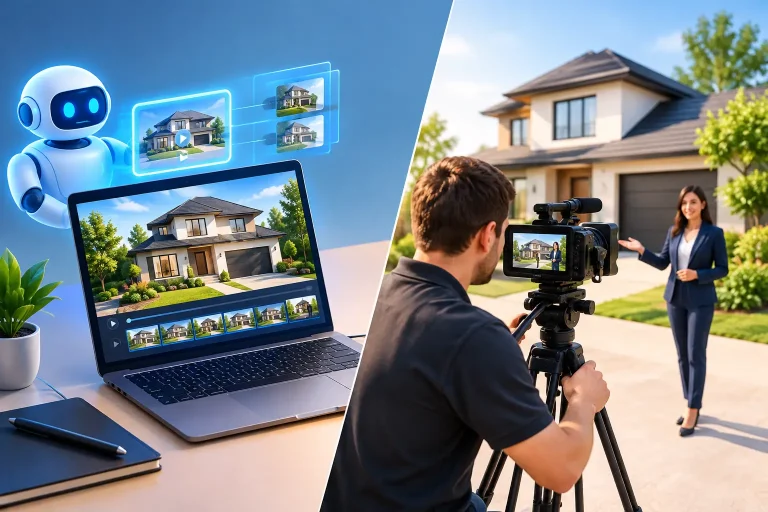
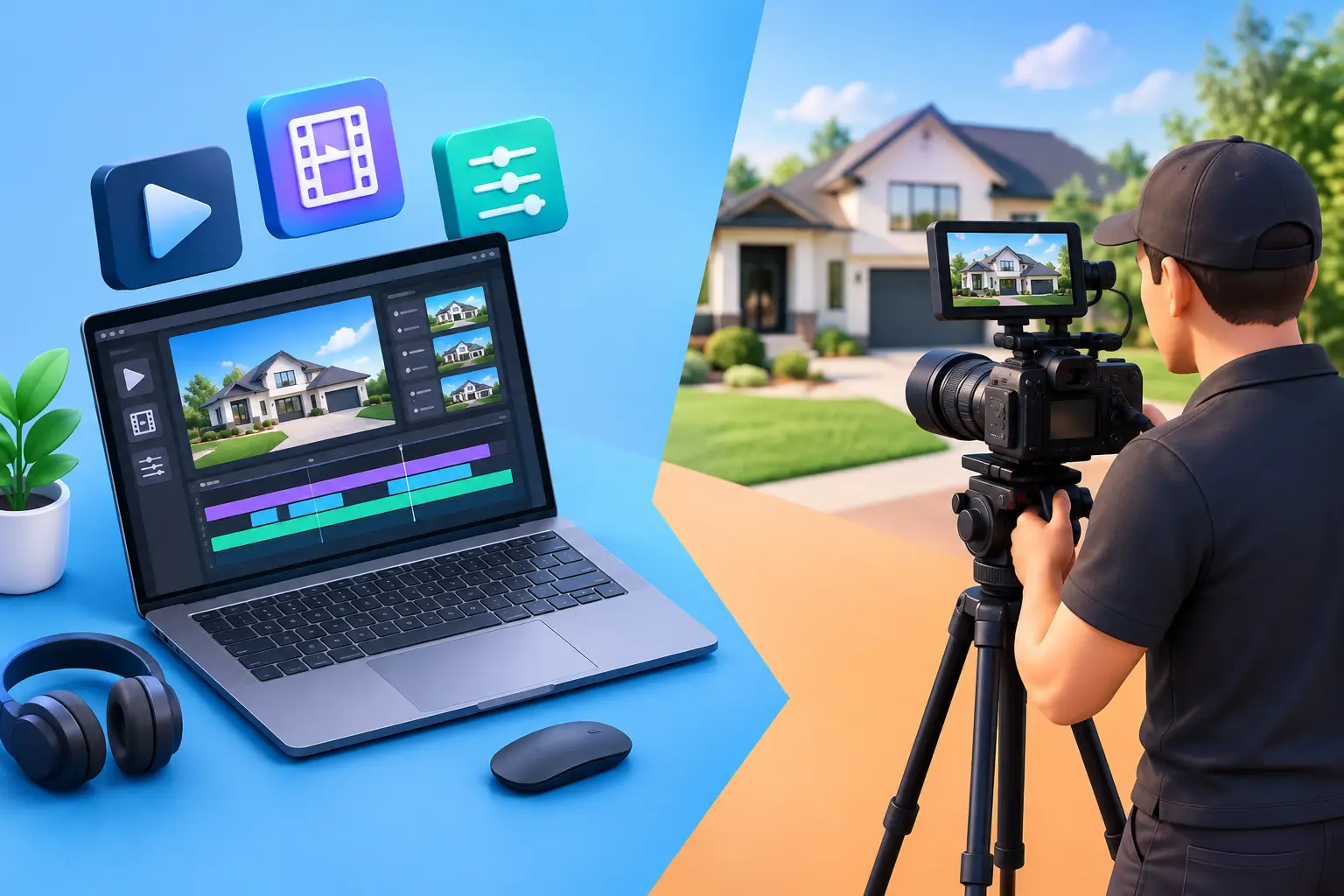
Neither option replaces the other in every situation. But they solve different problems. Videography is a custom production. Listing video software is a repeatable marketing system.
Speed Matters More Than Most Agents Expect
The first few days of a listing are often the most active. Your email announcement, MLS launch, social posts, and seller update all land better when the marketing looks coordinated from day one.
Videographer availability can create a bottleneck. Even excellent professionals have full calendars, weather constraints, travel time, and editing queues. If photos are ready but video is not, you may have to choose between launching without it or delaying the campaign.
Software removes that dependency. You can turn the photos from the listing shoot into a video without bringing another person back to the home. This is especially useful for properties that need to launch quickly, listings that go live after a price change, and homes where access is difficult to coordinate.
Speed is also about revisions. A property description changes. A room count needs correction. You decide the opening line should speak directly to a feature buyers will care about. With a software-based workflow, you can edit the spoken script before rendering instead of waiting for an editor to make a small change.
For an agent managing several active listings, that control adds up. Every listing can have a video, even when the calendar is packed.
The Cost Comparison Is About Frequency
A professional videographer may be a smart investment for a luxury listing, a distinctive property, or a campaign where cinematic footage is central to the pitch. But paying for a custom shoot on every listing is difficult to sustain for many independent agents and small teams.
The issue is not that videographers are overpriced. They are providing skilled labor, equipment, travel, planning, filming, and post-production. Those costs are real. The question is whether every listing requires that level of production to receive a useful video asset.
Listing video software creates a more predictable per-listing cost. Instead of treating video as a special upgrade reserved for certain homes, you can make it part of the standard listing package. That matters when you are competing for sellers who expect more than professional photos and a basic MLS entry.
A predictable workflow also makes it easier to explain your marketing plan at the listing appointment. You are not promising video only if the budget works. You are showing sellers that their home will receive a branded video for social, email, websites, and other channels as part of your process.
There is a trade-off. Software does not capture new footage. If the home needs aerial views, a true walkthrough, neighborhood scenes, or dramatic video of a waterfront setting, a videographer has an advantage. If you already have strong photos and need polished video distribution without a second production appointment, software is usually the more efficient choice.
Quality Means Fit, Not Just Camera Equipment
Agents sometimes compare a cinematic property film to a simple slideshow and assume those are the only choices. They are not.
Modern listing video software can create a professional presentation from high-quality photos using camera motion, captions, voiceover, music, scene pacing, agent branding, and 3D-style treatments. The goal is not to pretend the video was filmed on-site. The goal is to turn still assets into a clear, engaging property story that is ready to post.
The quality of the result still starts with the images. Well-lit, professionally composed listing photos give the software more to work with. A software-generated video cannot fix dark, low-resolution photos or compensate for missing shots of key rooms.
It also helps to distinguish between visual quality and marketing quality. A beautiful video that arrives late, contains outdated details, or only works in one format has limited value. A clear 1080p video that is branded correctly, captioned, narrated, and delivered in the sizes you need can do more for the listing because it actually gets used.
Use the right format for the channel
Landscape 16:9 video fits MLS displays, YouTube, websites, and many email placements. Vertical 9:16 video is built for Instagram Reels, TikTok, and Shorts. If you hire a videographer, confirm whether both are included before booking. A horizontal master file does not automatically become an effective vertical post.
This is one area where a platform workflow is practical. Visual Property Agent creates both 16:9 and 9:16 versions from the same listing, giving agents assets for the places buyers actually scroll.
MLS Compliance Needs a Separate Plan
Your social video can be fully branded with your name, brokerage details, logo, and contact information. Your MLS video may have different rules. Many MLS systems require an unbranded version, and requirements can vary by market.
A videographer may deliver a branded final cut unless you specifically request otherwise. That is not a problem if you discuss it upfront, but it is another item to manage. You may also need to pay for alternate edits, depending on the provider and package.
With listing video software, look for MLS-safe output as part of the normal workflow. You should be able to create a branded version for your marketing and an unbranded version for MLS without rebuilding the project. That protects your time and helps you avoid uploading an asset that needs to be replaced later.
The same principle applies to voiceover and property claims. Review every line before the video is rendered. Confirm square footage, school references, room descriptions, and any language that could be interpreted as a promise. Automation should make production faster, not remove your judgment.
When a Videographer Is the Better Choice
There are situations where custom footage earns its place. A high-end home with architectural details, a large estate with grounds, a property where views are the selling point, or a listing with a compelling neighborhood lifestyle story may benefit from an on-site production.
A videographer is also useful when you want the agent on camera, need drone footage, or are producing a flagship listing film designed for paid advertising. In those cases, the movement of real video footage creates something photo-based software cannot fully duplicate.
The strongest approach for many teams is not choosing one forever. It is setting a standard. Use listing video software for the majority of listings so every home gets a polished video quickly. Reserve videographer spend for properties where original footage will materially improve the campaign or support the seller relationship.
Build a Video Process You Can Actually Maintain
The best listing marketing system is the one you can deliver consistently when inventory picks up, a photographer runs late, or a new listing needs to be live tomorrow.
Start with the assets you already collect: professional photos, property details, your branding, and approved contact information. Create the video while the listing information is fresh. Review the script, confirm the MLS-safe version, then schedule the vertical and landscape versions across your launch plan.
That process gives you more than a video. It gives you a repeatable reason to tell sellers, with confidence, that every listing receives the marketing attention it deserves.