Upscale Real Estate Listing Photos That Sell
A high-end listing can lose momentum before a buyer ever reads the property description. They scroll through the photos, see a beautiful kitchen or a dramatic exterior, and move on. Upscale real estate listing photos create the raw material for a stronger first impression, but a static gallery alone may not hold attention long enough to communicate why the home commands its price.
The answer is not always a bigger production budget or another appointment at the property. It is a better way to package the visuals you already have. When strong listing photos become a polished video in the formats buyers actually watch, every room has more time to make its case.
What Makes Listing Photos Feel Upscale
Upscale does not simply mean bright, expensive, or heavily edited. It means the visuals make the property feel considered. The home is clean, the composition is deliberate, the light is balanced, and each image gives the viewer useful information about the space.
A photo of a primary suite should show more than a bed. It should communicate scale, natural light, storage, and the relationship between the bedroom and bath. A backyard image should show whether the space is private, entertaining-ready, low-maintenance, or genuinely expansive. The best images do not just document rooms. They help buyers picture a lifestyle.
That is especially important when you are marketing a higher-priced home. Buyers have more choices, sellers have higher expectations, and every marketing detail can reflect on your brand. But the same standard matters for a well-presented starter home, condo, or suburban family property. Professional presentation is not reserved for luxury inventory.
Making Upscale Real Estate Listing Photos Work Harder
A photo gallery has one major limitation: the buyer controls the pace. They may skip from the exterior to the kitchen, miss the renovated bath, and never notice the home office or community amenities. A short listing video creates order. It gives you a chance to lead viewers through the property and make the important details easier to understand.
Start with the photo sequence. Open with the image that best sells the listing, not necessarily the front exterior. For some homes, that will be a twilight exterior. For others, it is an open living room, a view, a pool, or a statement kitchen. The first few seconds need to earn attention.
Then move through the home as a buyer would experience it. Public spaces usually come first, followed by bedrooms, baths, outdoor areas, and the features that justify the list price. Finish with a memorable visual and a clear agent call to action. This structure is simple, but it prevents a video from feeling like a random slideshow.
Motion can add energy, provided it respects the original photography. Slow pans, subtle push-ins, and clean transitions make still images feel more cinematic without inventing details that are not there. Aggressive effects can cheapen a refined listing just as quickly as poor photography. For upscale properties, restraint usually performs better.
Add a Script That Explains the Value
Photos show finishes. A voiceover and captions explain why they matter.
A buyer may see quartz counters, wide-plank flooring, and a covered patio. Your script can connect those features to the buying decision: a kitchen designed for entertaining, flexible space for remote work, or an outdoor area that extends daily living beyond the home. The goal is not to read the entire listing description aloud. It is to give the viewer a reason to keep watching.
Keep the language specific and credible. Avoid claims such as “perfect” or “won’t last” unless there is a real reason to support them. Instead, call out tangible details: “The main level combines an open kitchen, dining area, and living room with direct access to the covered patio.” That tells a buyer more than a string of superlatives.
Before publishing, review every spoken line. Listing data imports can save time, but an agent should always confirm square footage, school references, renovation details, and any language related to views, amenities, or neighborhood features. Fast marketing is useful only when it is accurate.
Create Two Versions for Where Buyers Watch
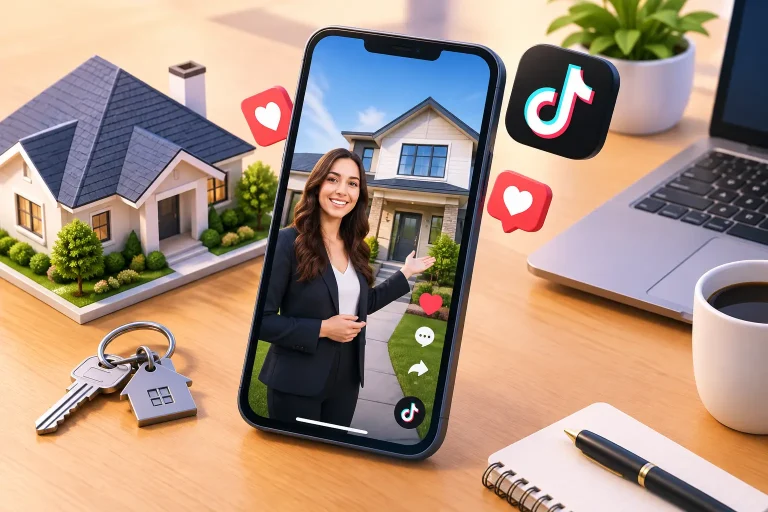
Your MLS audience and your social audience do not consume content the same way. MLS, property websites, YouTube, and email generally favor a 16:9 landscape video. Instagram Reels, TikTok, YouTube Shorts, and Stories need a 9:16 vertical version that fills the screen.
Creating both from the same listing photos is one of the easiest ways to get more value from a photography package. The content does not need to be reinvented for every channel. It needs to be formatted correctly, captioned clearly, and delivered ready to post.
For the MLS, keep an unbranded version available when required. For social, email, and your website, use the branded version with your name, brokerage details, contact information, and a clear closing frame. That separation protects compliance while allowing the listing to build your business outside the MLS.
Visual Property Agent is built around this practical workflow: use the listing photos you already have, review the editable narration, and receive branded and MLS-safe 1080p video versions without booking a videographer or spending hours in editing software.
Protect the Quality of the Original Images
Not every AI treatment improves a property photo. In real estate, accuracy matters. A buyer who sees a room that looks materially different in person may lose trust quickly, and the seller may question the marketing choices.
Use enhancements that preserve the property rather than redesign it. Gentle camera movement, polished captions, music that fits the pace of the home, and realistic 3D-style motion can elevate a listing when the original photo remains recognizable. Avoid changing views, adding finishes, altering room proportions, or making a modest home appear to have features it does not have.
This is also why the quality of the source photos still matters. Straight vertical lines, clean windows, consistent color, and enough images to tell the full story will produce a better video. If the home has a standout feature, make sure it was photographed from more than one useful angle.
Common Mistakes That Make a Premium Listing Feel Generic
The first mistake is treating every listing the same. A downtown condo, an acreage property, and a renovated colonial should not use identical scripts, music, or feature order. The production can be fast while still reflecting what makes the home distinct.
The second is trying to say too much. A 45- to 75-second video does not need to cover every closet, appliance, and disclosure item. Lead with the strongest selling points. Buyers who are interested can move to the full listing, photo gallery, and showing.
The third is waiting for perfect conditions. A traditional video shoot can be worthwhile for an architectural property, a large estate, or a listing where aerial footage and live walkthrough shots are central to the strategy. But for many listings, waiting to schedule filming and then waiting again for the edit means losing valuable early-market attention. A photo-based listing video gives you a professional asset when speed matters most.
A Repeatable Workflow for Every New Listing
The strongest agents do not reserve video for only their most expensive properties. They build a repeatable process so every seller sees a modern marketing plan.
Once your photos are ready, create the video while the listing is being finalized. Use the best exterior or hero image first, verify the imported property details, edit the narration for accuracy, and choose a voice and music style that fit the home. Then publish the landscape version where buyers research listings and the vertical version where they scroll.
That process gives you more than a single post. It gives you an MLS-ready asset, a listing-page video, an email feature, a social reel, and seller-facing proof that you market with intention. No separate shoot. No editing queue. No need to let strong photos sit quietly in a gallery.
Your next listing does not need a complicated production plan to look more polished. It needs clear visuals, a credible story, and a video format that puts the property in front of buyers wherever they are watching.