Seller Presentation Video for Agents That Wins Listings
A seller presentation video for agents is not a property tour. It is proof that you have a clear, repeatable plan to market a seller’s home better than the agent sitting across from you at the kitchen table. When a homeowner is comparing similar commission rates, that proof can be the difference.
Sellers do not hire an agent because they heard the phrase “social media marketing.” They hire the agent who can show exactly what will happen after the listing agreement is signed. A short video makes that process visible: professional listing photos become branded video, a landscape version supports traditional property marketing, and a vertical version is ready for Reels, TikTok, and Shorts.
What a Seller Presentation Video Should Prove
The job of this video is simple: reduce uncertainty. A seller wants to know their home will not sit in a folder while the agent waits for an editor, a photographer, or the right time to post.
Your video should establish three things. First, every listing receives a professional marketing asset, not only the highest-priced homes. Second, the process is fast enough to support momentum around a new listing. Third, you have a distribution plan that reaches buyers where they actually watch content.
This is especially useful when competing against agents who say they “do video” but cannot explain the timeline, cost, or format. Promises are easy. A sample video and a straightforward workflow are more convincing.
Keep It Focused on the Seller, Not Your Software
A common mistake is turning a listing presentation video into a product demo. Sellers do not need a screen-by-screen explanation of how footage is edited or where captions are selected. They need to see the outcome and understand why it helps their sale.
Lead with the value: their home will be presented as a polished, shareable story from day one. Then explain the operational advantage in plain language. You use the listing photos already being captured. You create video versions for the places buyers browse. You can move quickly without booking a videographer, coordinating another property visit, or waiting days for an edit.
That message is stronger than claiming every video will go viral. No agent can promise that. What you can promise is a consistent launch standard, more usable content, and a listing that is easier for buyers to remember and share.
A strong video is 60 to 90 seconds
For a seller meeting, short wins. The seller is evaluating you, not settling in to watch a three-minute commercial. Aim for 60 to 90 seconds and make every scene earn its place.
Start with a direct statement about your listing-launch approach. Show examples of a standard HD property video, a vertical social version, and a clean unbranded version where MLS rules require it. Close with a simple promise: every listing receives a marketing plan built to be seen, shared, and acted on quickly.
If you serve a luxury market, you may use a more cinematic sample. If you serve a broad range of price points, show the type of polished output a typical seller can expect. The right sample is believable. A $3 million estate video is not useful proof for a seller of a $425,000 home if that level of production is not part of your normal package.
Build the Story Around Launch Day
The most persuasive presentation videos follow the seller’s timeline. They show what happens from signed listing agreement to public launch.
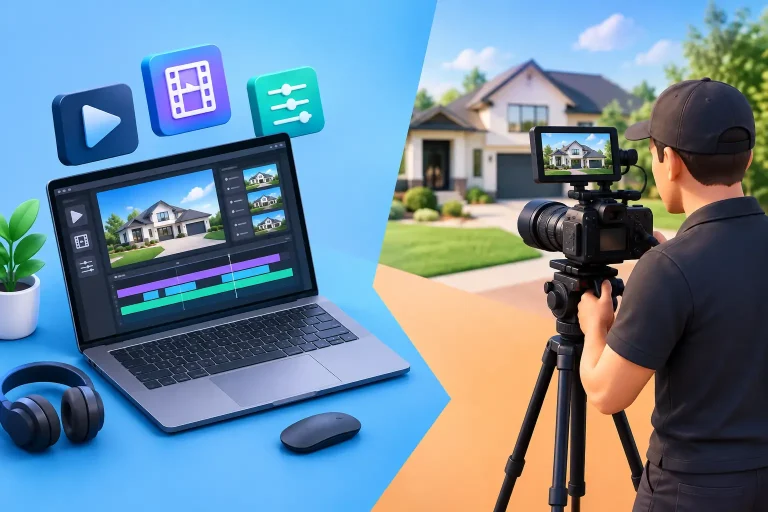
Begin with preparation. Explain that professional photos remain the foundation. The video should complement those photos, not replace them. Then show how those images become a narrated video with motion, music, captions, title cards, and your contact information.
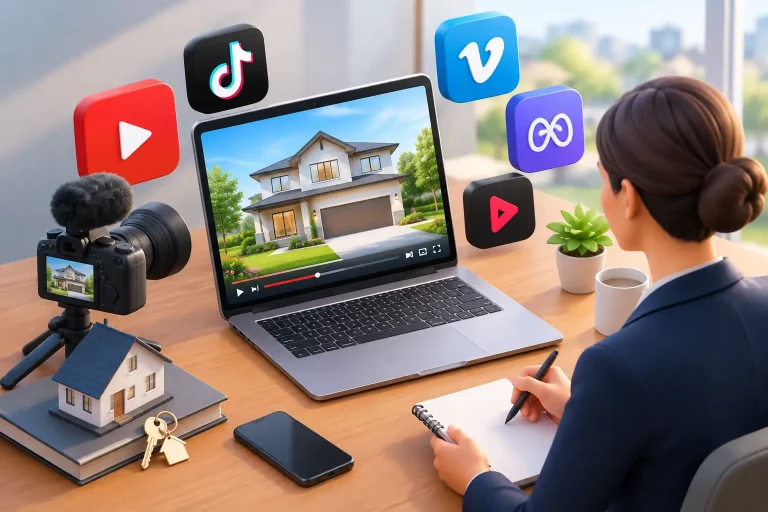
Next, address delivery. Sellers should understand that one asset is rarely enough. A 16:9 landscape video fits YouTube, websites, email, and many property marketing uses. A 9:16 vertical version fits Instagram Reels, TikTok, and YouTube Shorts. Making both from the same listing materials helps you stay visible without creating separate campaigns from scratch.
Finally, show the distribution rhythm. A listing video can be part of launch-day marketing, a follow-up social post, an email feature, and a weekend open-house reminder. The exact mix depends on the property, your local market, and your audience. The point is that you have material ready to use, not a vague intention to create it later.
Use Specifics That Make Your Plan Credible
Sellers hear broad claims all the time: maximum exposure, targeted marketing, premium presentation. Those phrases become more persuasive when paired with specifics.
Instead of saying, “We create great videos,” say, “Your listing photos are turned into a narrated 1080p property video, with a vertical version for social and a landscape version for your website and email.” Instead of saying, “We move fast,” explain when the marketing assets are expected to be ready and how you avoid delays caused by scheduling a separate video shoot.
Specifics also protect you from overpromising. Do not imply that video alone sets the sale price or guarantees a buyer. Video is a presentation tool and a distribution tool. It helps a home make a stronger first impression and gives buyers more ways to encounter it. Pricing, condition, location, inventory, and buyer demand still matter.
Show Your Brand Without Creating MLS Problems
Your seller presentation can show branded examples with your name, phone number, and brokerage identity. That is appropriate when you are explaining your marketing service.
But sellers should also hear that you understand compliance. Some MLS systems have rules for media displayed inside the listing. In those cases, an unbranded version can be the safer choice. The branded version can still support your website, social profiles, email marketing, and direct sharing.
Explaining this distinction does more than answer a technical question. It signals that your marketing is organized. You are not throwing content online and hoping it works. You are creating the right version for the right channel.
Make Video a Standard, Not a Special Favor
The biggest selling point is consistency. Sellers want to know whether video marketing is included because their home qualifies, because you happen to have extra time, or because it is how you market every listing.
When possible, position video as part of your standard launch system. That does not mean every home needs the same creative treatment. A condo, a starter home, a waterfront property, and an acreage listing may call for different messaging. But each can receive a professional video asset that uses the available photography effectively.
This approach also improves your own business. When every listing has a video, your social channels stay active, your brand looks more consistent, and future sellers see evidence of your work before they ever request a consultation.
For agents who need a fast, repeatable process, Visual Property Agent converts existing listing links or uploaded photos into narrated, branded 1080p videos in both landscape and vertical formats. You can edit the script before rendering, create branded and MLS-safe unbranded versions, and avoid adding another shoot date to an already crowded listing timeline.
Where This Fits in the Listing Appointment
Do not open your appointment by pressing play. First, learn what the seller cares about. Are they worried about timing, price, privacy, relocation, or whether the home will stand out? Your conversation should shape the way you introduce the video.
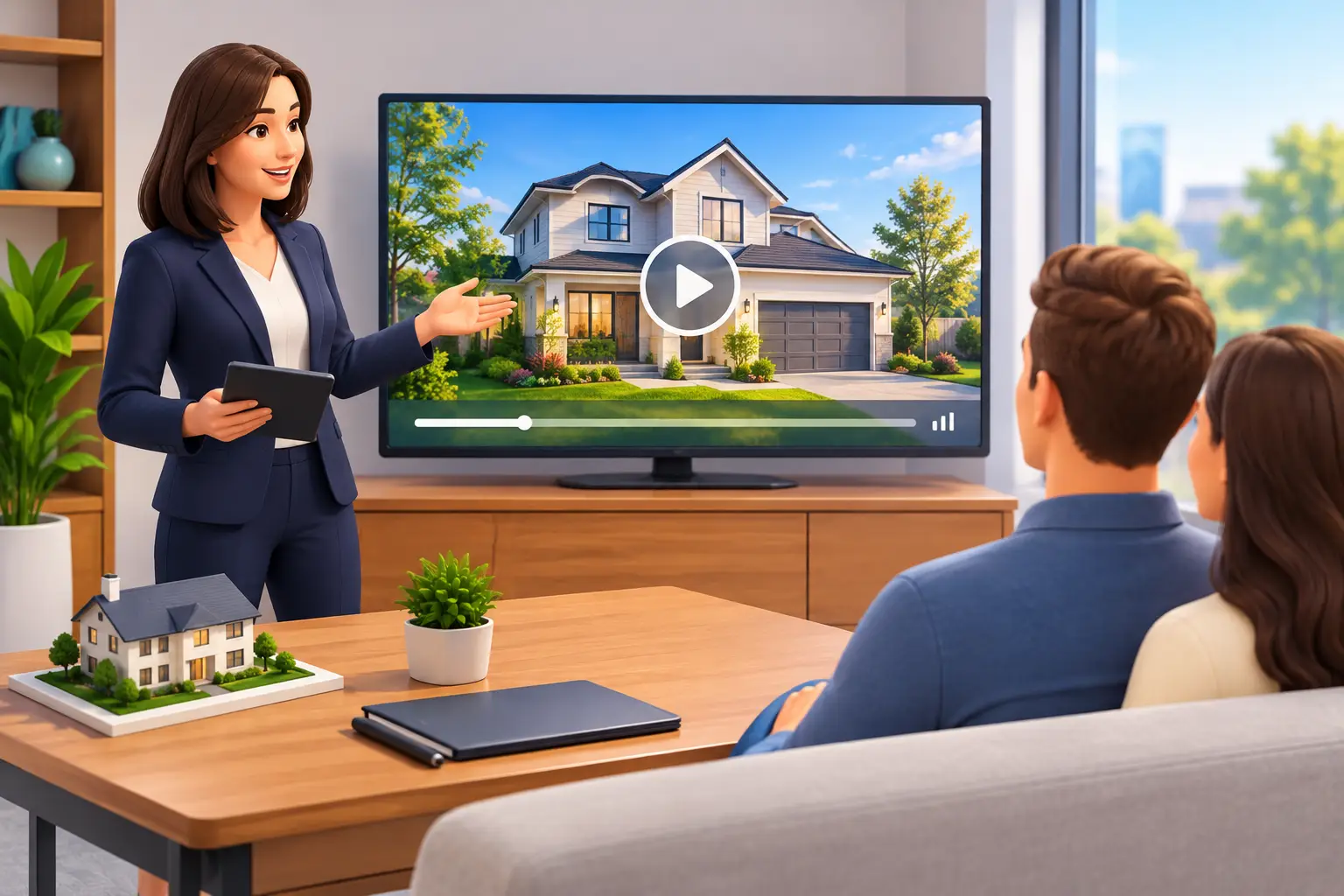
Once you discuss your marketing plan, use the video as proof. A simple transition works well: “Rather than just tell you how we launch a listing, let me show you a recent example of the kind of presentation your home will receive.”
After the video, pause. Let the seller respond. Then connect the example to their property: which features deserve emphasis, what buyer audience you expect, and which channels make the most sense. That conversation feels personal because it is personal. The video establishes your standard; your strategy shows how you will apply it to their home.
A seller does not need another promise that you will work hard. They need to see a marketing system that is already ready to go. Bring a clear example, explain the timeline honestly, and make it easy for them to picture their home as the next polished listing you launch.