Listing Video Platforms: What Agents Need
A new listing goes live at 9 a.m. The seller wants to see it promoted immediately. You need an MLS-safe asset, a social post that does not look improvised, and a way to keep the next listing from falling behind. That is where listing video platforms earn their place in an agent’s workflow.
The right platform does more than put photos to music. It turns the listing materials you already have into video assets you can actually use: polished, correctly sized, branded where appropriate, and ready on the timeline your business requires. The wrong one creates another job – gathering files, learning editing tools, fixing scripts, resizing exports, or waiting for someone else to finish.
What Listing Video Platforms Should Solve
For most residential agents, video is no longer a special add-on reserved for luxury listings. Sellers expect it, social channels reward it, and a listing presentation looks stronger when you can say every property receives professional video marketing.
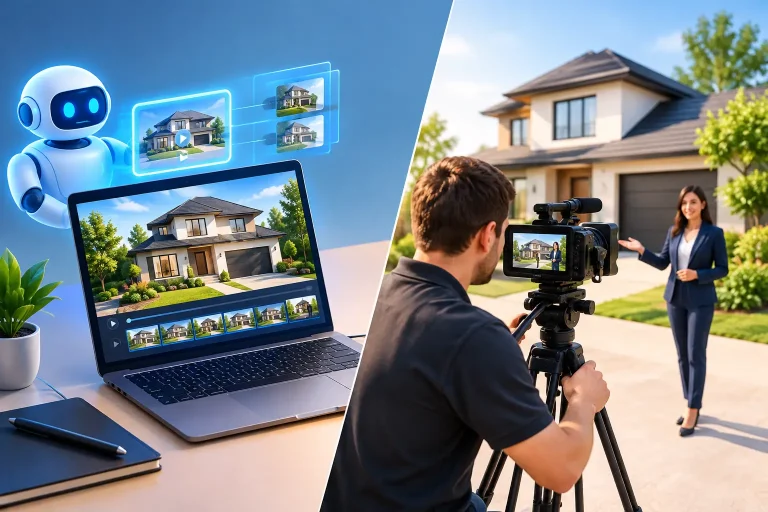
But “professional video” can mean very different things. A full videographer shoot can be valuable for a landmark property, a high-end waterfront home, or a listing that benefits from cinematic walkthrough footage. It also means booking a date, coordinating property access, hoping the weather cooperates, and waiting for the edit. The cost can make it hard to use on every listing.
Traditional editing software gives you more manual control, but it asks you to become the producer. You choose the clips, write the narration, time captions, add transitions, export the right dimensions, and repeat the work for every property. That may work if video production is already your specialty. For a busy agent, it usually is not.
Listing video platforms sit between those two options. They should use listing photos, property details, and agent information to create a finished property reel without requiring filming or editing experience. The real question is not whether a platform can make a video. Most can. The question is whether it removes work without creating compliance, quality, or branding problems later.
How to Compare Listing Video Platforms
Start with the output, not the feature list. A platform may promise AI, templates, animation, or automation. None of that matters if the final video looks generic, crops your photos poorly, or gives you only one format for every channel.
Photo treatment matters more than flashy effects
Your listing photos are the foundation. They should remain recognizable, accurately represent the property, and receive camera movement that adds energy without inventing features or distorting rooms. Overprocessed visuals can create a problem with both buyers and sellers. A property video should make the home feel active and polished, not make viewers question whether the imagery is real.
Look for a platform that works well with the photos already in your listing workflow. That means it should handle a standard set of professional photos without making you film new footage or spend hours rearranging assets. If 3D-style treatments are available, they should enhance the presentation while keeping the original property images intact.
Narration needs agent control
Narrated video can hold attention longer than a silent slideshow, especially when it gives buyers a reason to keep watching. But automated narration has a clear risk: property details can be wrong, awkwardly phrased, or legally sensitive if no one reviews the script.
A practical platform writes a first draft from listing data, then lets you edit every spoken line before rendering. This is not a minor feature. It is the difference between useful automation and content you have to trust blindly. You should be able to correct a school reference, adjust a room description, remove an unsupported claim, or give the script a more local, seller-facing tone.
Voice choice also matters. A natural voice, readable captions, and pacing that lets the photos breathe can make a fast-produced asset feel considered. You do not need dozens of options. You need a few credible choices and the ability to review what will be said.
One format is not enough
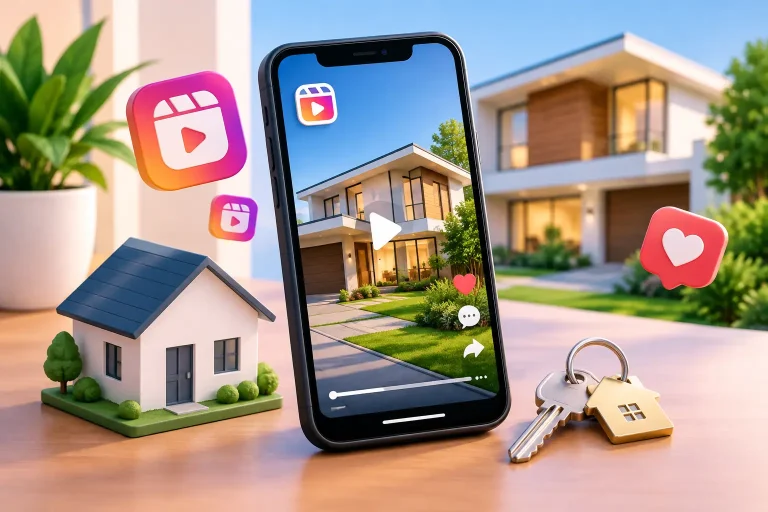
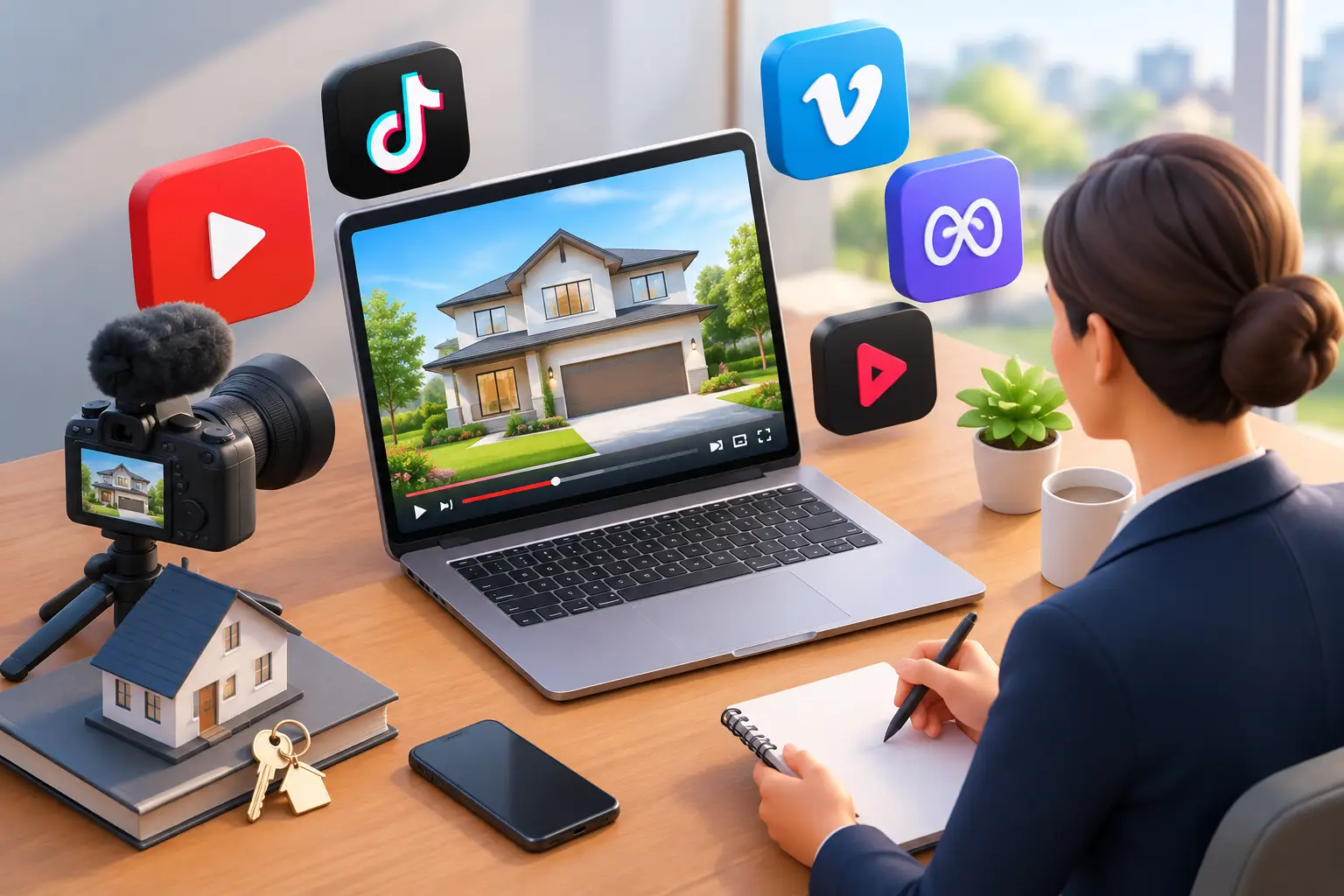
MLS, YouTube, property websites, email, Instagram Reels, TikTok, and YouTube Shorts do not all use the same screen shape. A 16:9 landscape video fits traditional property pages and YouTube. A 9:16 vertical version is built for mobile-first social feeds.
If your platform delivers only landscape, you are left with a choice: post a poor fit to vertical channels or create a second video yourself. If it delivers only vertical, it may not serve your MLS or website presentation well. The most efficient choice produces both versions from the same listing, so you have a complete distribution package without extra editing.
MLS safety should be built into the process
Marketing video and MLS video often have different requirements. Your social content should show your branding, contact details, title card, and call to action. Your MLS version may need to remain unbranded depending on local rules and syndication requirements.
Do not assume one file works everywhere. Ask whether the platform can create a clean, MLS-safe version alongside your branded marketing version. This keeps your distribution simple and helps prevent an avoidable compliance issue when a listing is moving quickly.
Speed Has to Include Review Time
A platform can claim fast turnaround while still taking too much of your time. If you have to upload photos one at a time, manually write a script, place captions, and create separate exports, the production burden still sits with you.
The best workflow is straightforward: import the listing link or upload the photos, review and edit the generated details, then render the finished video. You remain in control of the claims and branding, while the platform handles the repetitive production work.
That distinction matters on a Friday afternoon when a seller wants marketing live before the weekend. It also matters at scale. Saving 20 minutes on one listing is helpful. Saving it on 10, 20, or 50 listings per month changes how consistently your business can market inventory.
Visual Property Agent is designed around that reality. It turns a listing link or existing listing photos into narrated 1080p video, with branded and MLS-safe options plus 16:9 and 9:16 delivery. The point is simple: every listing can get a video without scheduling a shoot or opening an editing timeline.
Cost Is More Than the Monthly Price
A low subscription price can look attractive until you find out it limits exports, adds charges for vertical versions, restricts branding, or makes you buy credits for standard features. A higher-priced service may be worthwhile if it replaces a recurring production expense and gives you enough videos to use it consistently.
Compare cost per finished, usable listing asset. Include the branded version, the MLS-safe version, landscape and vertical formats, and the time your team spends creating each one. A $300 videographer may be a smart choice for a premium property. It is harder to justify as the default for every home you list.
For agents with a few listings a year, a per-listing option may be the cleanest fit. For active agents and teams, a monthly or annual plan usually makes more sense when the included volume keeps the per-listing cost predictable. Photographers, brokerages, and resellers should also look for a workflow that supports multiple clients, consistent branding, and repeatable delivery.
Choose for the Workflow You Actually Have
The best platform depends on how you market properties now and where you want to improve. If you already hire a videographer for every listing and the economics work, automated photo-based video may be a complement rather than a replacement. Use it for quick social assets, price adjustments, open-house promotion, or listings that do not justify a full shoot.
If video is inconsistent because it feels expensive, slow, or technical, the right platform can make it standard operating procedure. Look for photo-preserving visuals, editable narration, captions, agent branding, MLS-safe exports, and both landscape and vertical files. Those are not decorative extras. They determine whether the video gets posted everywhere it should.
Your sellers do not need to hear about the production process. They need to see their home marketed with the same care you promised in the listing presentation. Choose a system that lets you deliver that standard quickly, then spend the recovered time where it matters most: winning the next listing and serving the clients you already have.