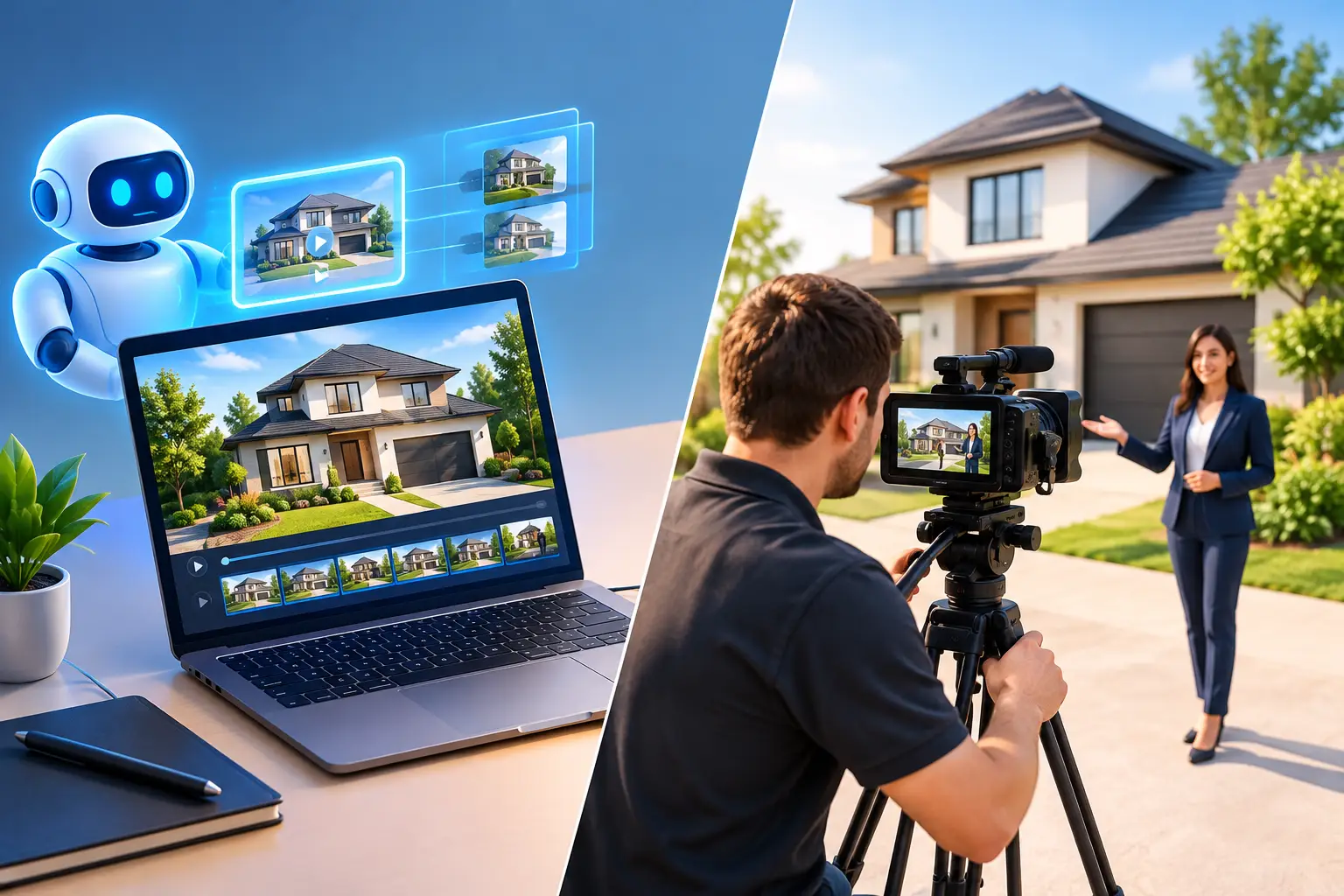
AI Property Videos Versus Filming for Agents
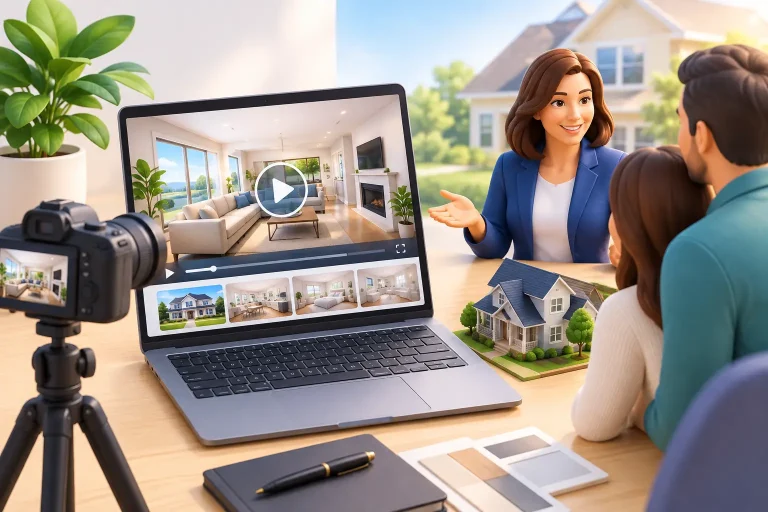
A new listing goes live on Thursday. The seller expects it to look polished online by the weekend, you need an MLS-safe asset, and your social channels cannot sit quiet for another week. That is where AI property videos versus filming becomes a practical business decision, not a debate about technology.
Traditional video can be excellent. But it requires a date on the calendar, access to the property, favorable conditions, and a post-production queue. AI video starts with the listing photos and property details already in your workflow. For many listings, that difference determines whether the home gets a video at all.
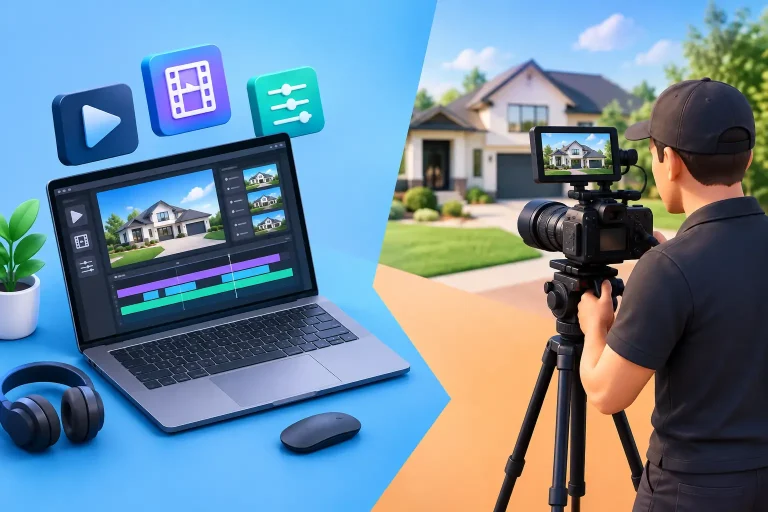
AI Property Videos Versus Filming: The Real Difference
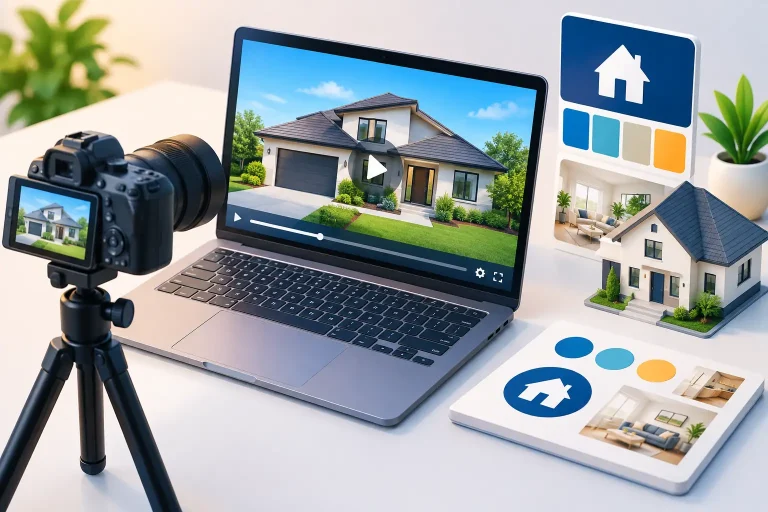
The biggest distinction is simple: a filmed property video captures new footage at the home, while an AI property video turns existing listing photography into a finished video asset with movement, narration, captions, music, title cards, and agent branding.
Filming is a production service. You book a videographer, prepare the property, coordinate access, and wait for an edit. The result can include walk-through footage, exterior approaches, neighborhood scenes, aerials, and details that still photography may not show.
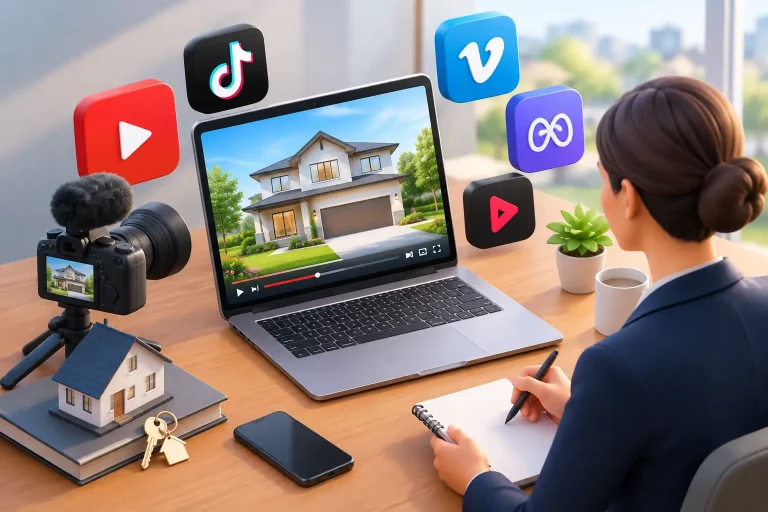
AI video is a production shortcut built around assets you already have. Upload photos or import a listing, review the script, and render versions ready for where buyers actually watch: a 16:9 landscape version for YouTube, websites, and presentations, plus a 9:16 vertical version for Reels, Shorts, and TikTok.
Neither approach wins in every situation. The right choice depends on the property, the deadline, the budget, and how consistently you want to market every listing.
When Filming Is Worth the Investment
A professional videographer is most valuable when the movement through a space is part of the sale. A waterfront home with a dock, a luxury property with dramatic sightlines, a residence with an exceptional indoor-outdoor layout, or acreage that benefits from drone footage can justify a dedicated shoot.
Filmed footage can show how a buyer enters the home, moves from kitchen to living room, or steps onto a patio with a view. That spatial context is difficult to match when the source material is still photography. It can also create a more cinematic result when the videographer has the right gear, lighting skills, and editing judgment.
There is also a seller-expectation factor. On a high-end listing, a full media package may be part of the presentation you promised during the listing appointment. In that case, professional filming can be a smart line item, especially when it includes aerial footage, lifestyle scenes, or a custom agent introduction.
The trade-off is operational. A shoot can be delayed by weather, access, an unprepared property, or the videographer’s schedule. Then comes editing. If you manage several active listings, the cost and coordination can make video something reserved for only your largest opportunities.
Where AI Property Videos Have the Advantage
AI video is built for volume, speed, and consistency. It makes sense when you have strong listing photos and need a professional video presence without adding another appointment to your week.
Instead of booking a shoot, you use the photos already captured for the listing. The workflow can produce a narrated 1080p reel with animated camera movement, captions, music, branding, and contact information. You can edit every line of the narration before rendering, which matters when you want to emphasize a feature, use compliant language, or keep the message aligned with the listing remarks.
That creates a more realistic standard for most agents: every listing gets a video, rather than only the listings with room in the marketing budget for a videographer.
AI also solves the format problem. A horizontal video alone is not enough when your lead-generation activity happens across vertical social platforms. Creating separate edits manually takes time and often costs extra. When both 16:9 and 9:16 versions are delivered from the same listing, your marketing can move faster without treating social video as an afterthought.
For independent agents and small teams, predictable production is often more useful than an occasional cinematic showcase. You can post a listing launch video, share it in an email, add it to your website, send it to the seller, and keep your social feed active without learning editing software.
Cost Is More Than the Videographer’s Fee
The visible cost of filming is the invoice. The full cost includes scheduling, travel, access coordination, reshoots, edit revisions, and the time your listing sits without video while you wait for delivery.
That does not mean filming is overpriced. Skilled videographers bring real value, particularly on properties that need custom visual storytelling. But it is rarely the most economical option for recurring, standard residential listings.
AI property video changes the math because the photography and listing details are already paid for or already available. Rather than starting a new production process, you extend the value of assets you have. That can make video viable for condos, starter homes, rentals, price reductions, open houses, and listings that need a fast relaunch.
The question to ask is not, “Which option is cheapest?” Ask, “Can I afford to give every listing the marketing attention it deserves?” If traditional filming means only a small percentage of your listings receive video, an AI workflow may produce more total marketing value across your pipeline.
Quality Depends on the Source Material
AI video is not a replacement for poor photography. If the rooms are dark, cluttered, poorly framed, or missing key spaces, no video treatment can create the visual information that was never captured. Start with clean, well-lit listing photos that tell the property’s story in a logical order.
Filming has a similar dependency. A great videographer cannot fully overcome an unprepared home, weak lighting, or missing access to important areas. The difference is that a videographer may be able to adjust composition in real time, while AI works from the images you provide.
For AI video, use a complete photo set. Include the strongest exterior image, the main living spaces, kitchen, primary suite, bathrooms, outdoor areas, and distinctive features such as a fireplace, home office, pool, or finished basement. Avoid repeated angles unless they add something meaningful.
Also keep the narrative accurate. AI can write a strong first draft, but you should review the script before rendering. Remove claims that cannot be verified, correct school or neighborhood references, and make sure the voiceover reflects the listing’s actual strengths. A quick review protects your brand and makes the finished video feel intentional.
MLS Compliance Changes the Choice
Your marketing video may need two jobs: promote your personal brand on social media and meet MLS rules where agent branding is restricted. A single heavily branded video does not always work everywhere.
This is one reason an AI workflow can be especially useful. You can create a branded version for your social media, email, website, and seller updates, then use an unbranded, MLS-safe version where required. The listing still benefits from video exposure without forcing you to rebuild the asset for each distribution channel.
With filmed video, make this requirement clear before production begins. If your editor delivers only one branded version, you may face extra cost or turnaround time to get a compliant alternative.
A Practical Decision Framework
Choose filming when the property has visual experiences that depend on real movement, scale, scenery, or aerial coverage. It is also a strong choice when the listing price, seller expectations, and marketing budget support a custom production.
Choose AI video when speed matters, your photo set is strong, you need content in multiple formats, or you want every listing to have a polished video asset. It is particularly effective for agents managing regular listing volume and for teams that need a repeatable standard without adding production bottlenecks.
A hybrid approach can work well, too. Use professional filming for signature listings and AI video for every other property, plus price improvements, open-house promotion, and fast social posts. That gives your marketing a premium option without making premium production the minimum requirement.
Visual Property Agent is designed around this practical middle ground: turn listing photos into narrated, branded 1080p property videos without filming, editing expertise, or days of waiting. The goal is not to pretend every home needs a cinematic shoot. It is to make sure every home can be presented professionally wherever buyers are watching.
The best video strategy is the one you can execute consistently. Give the exceptional property the custom production it deserves, then build a reliable system that keeps every other listing visible, polished, and ready to share.